Screen 1 of 130:00–0:03
Five words you will argue about for the rest of this course.
The five words, one question each
- TransparencyCan the people affected see when AI shaped the work, and what it did?
- FairnessDo AI tools and rules land evenly, and can a decision be appealed?
- AccountabilityIs a named person responsible for checking, deciding, and fixing harm?
- PrivacyWho controls what data about people is collected, kept, and shared?
- SafetyIs AI output checked before it can hurt someone, and can someone stop it?
You will think from four perspectives
- Studentuses the tools and lives with the grade
- Teacherdesigns the task and grades the work
- Universitysets campus rules and buys the tools
- Policy makerwrites rules every department must follow
Each table plays one role per case, and the roles rotate from case to case. More than four tables? Repeat the pattern.
Four review papers behind these words are optional support and your assignment reading, on the Topic 3 page.
Why this leads forwardFive words, one case each; each case storyboard uses AI-generated illustrations. You argue as your role, not as yourself.
3 MIN
Screen 2 of 130:03–0:05
Angle 1 of 5 · Transparency · what it means
Transparency: people can see when AI was used, and how.
Transparency means the people affected by a piece of work can see whether AI shaped it, and what help it gave.
Not transparent
A campus help chat answers students. They assume a staff member is typing; it is an AI, and nobody says so.
Transparent
The chat opens with: “You are talking to an AI assistant. A staff member reviews every refund decision.”
In course terms. It protects knowing when AI shaped a decision and what help it gave. The question it asks: What must be disclosed, to whom, at what time, and in what form? What it asks of an institution: publish a disclosure format naming the tool, type of help, and affected stage. In college: a student discloses the tool, the type of help, and the stage affected.
Why this leads forwardNext: a case where nobody asked and nobody told. First the situation, as a class; then your table plays its role.
2 MIN
Screen 3 of 130:05–0:14
Angle 1 of 5 · Transparency · the case
Nobody asked, nobody told. Was anything wrong?
Before your table reads its role question: privately finish “The teacher should first ______ because ______.” This is an ungraded diagnostic baseline and there is no expected correct answer.
1 · What is happening? A student runs a finished draft through an AI tool to rewrite it for clarity. The argument, sources and conclusion are unchanged. The syllabus says nothing about AI. The paper gets a B+. Three weeks later the department publishes a disclosure rule.
2 · Role play. Each table is one person in this story. Read your table’s question, then agree on one action your role takes now (two minutes). Hear another table: keep or change it.
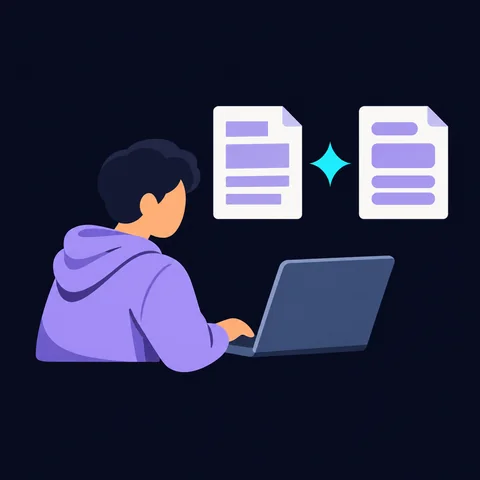 Finished draft, rewritten by AI for clarity only
 Syllabus: nothing about AI
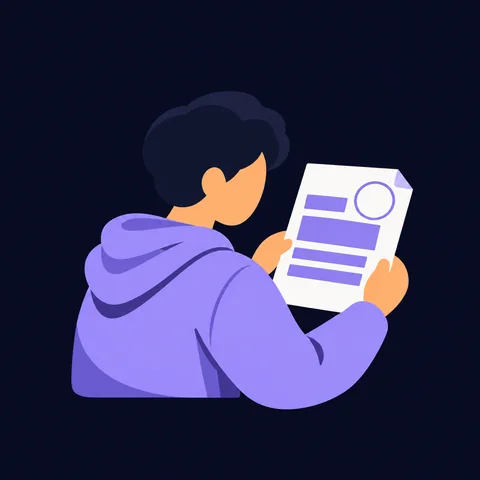 Graded: B+
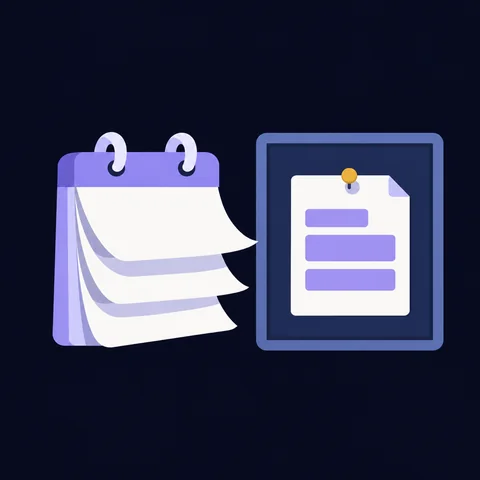 Three weeks later: a disclosure rule
Table 1 · STUDENTYou used the tool. Do you go back and tell her?
Table 2 · TEACHERYou graded it. Does the new rule apply backwards?
Table 3 · UNIVERSITYYou just published the rule. Does it cover work already submitted?
Table 4 · POLICY MAKERYou write rules for every department. Who has to be told, and when?
Where the four roles disagree. The syllabus set no AI rule. The teacher graded what she could not see. The university created a duty afterwards. The policy maker decides whether disclosure is about honesty or enforceability.
Write your sentence again. Did your answer change? Why or why not?
Transparency is a format published in advance, not a confession after the fact.
STUDENTNo rule existed, so I owed nothing
TEACHERI graded without knowing AI was used
UNIVERSITYOur rule came after the paper
POLICY MAKERCan a new rule reach backwards?
THE RULE ARRIVED AFTER THE PAPER.
Why this leads forwardTransparency asked who must be told. Next: a gap nobody chose.
9 MIN
Screen 4 of 130:14–0:16
Angle 2 of 5 · Fairness · what it means
Fairness / justice: AI tools and rules treat people evenly.
Fairness asks whether AI tools and rules land evenly: who can reach the tool, who carries its errors, and whether anyone can appeal.
Not fair
An AI essay-scoring tool is less accurate for students who write English as a second language, and nobody can ask a person to rescore.
Fair
The tool’s errors are checked for every group, gaps are fixed before it is used, and any student can ask a person to review the score.
In course terms. It protects access, burdens, errors, and the chance to appeal. The question it asks: Which groups, access differences, error patterns, remedies, and appeal paths matter? What it asks of an institution: equivalent access routes, and one published response and appeal path.
Why this leads forwardNext: one assignment done with very different tools. First the situation, as a class; then your table plays its role.
2 MIN
Screen 5 of 130:16–0:25
Angle 2 of 5 · Fairness · the case
Same assignment, same rubric, different tools. Is the grade fair?
1 · What is happening? Two students submit the same assignment. One pays for the best available AI tools; the other uses a free tier that is slower, more limited, and sometimes unavailable. Both disclose. The paid-tool paper is measurably better written. The rubric grades written quality.
2 · Role play. Each table is one person in this story. Read your table’s question, then agree on one action your role takes now (two minutes). Hear another table: keep or change it.
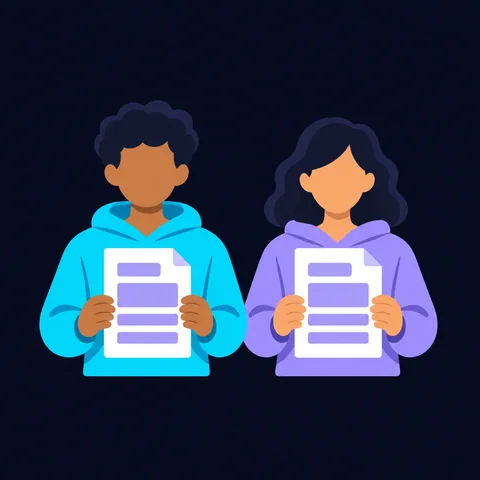 Same assignment
 Paid tools vs. a slow, limited free tier
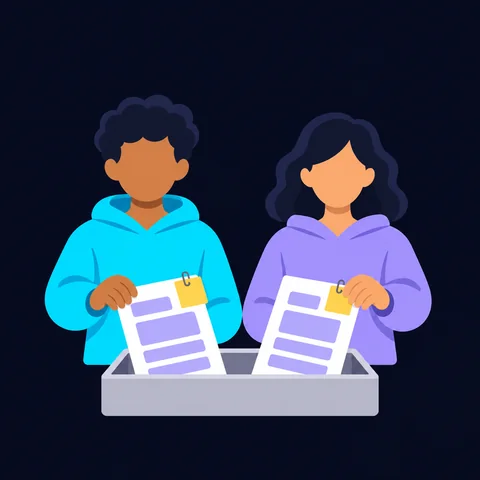 Both disclose
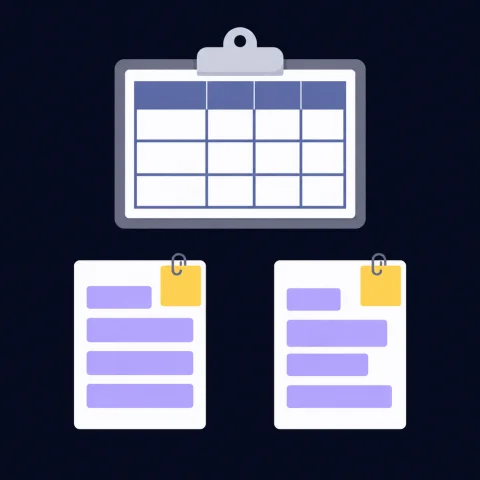 The rubric grades written quality
Table 1 · TEACHERYou wrote the rubric. Do you change what it measures, or how students reach it?
Table 2 · UNIVERSITYYou control the budget and the licences. What do you actually owe every student?
Table 3 · POLICY MAKERYou cannot fund every tool for every campus. What minimum do you require?
Table 4 · STUDENTYou used the free tier. What do you ask for, and from whom?
Where the four roles disagree. The teacher can change the rubric but not the budget. The university can buy licences; what it owes every student is the question. The policy maker must name a floor a poorer campus can still meet.
Two answers work: supply the tool, or stop grading what the tool provides. They cost different people differently.
“Everyone may use AI” is a fairness claim only if everyone can.
STUDENTMy free tier was slower and more limited
TEACHERMy rubric rewards polish money can buy
UNIVERSITYI hold the budget and the licences
POLICY MAKERI must set a minimum every campus can meet
EQUAL PERMISSION IS NOT EQUAL ACCESS.
Both disclosed. The rubric did what it says.
Why this leads forwardFairness asked who can reach the tool. Next: when the tool is wrong.
9 MIN
Screen 6 of 130:25–0:27
Angle 3 of 5 · Accountability · what it means
Responsibility / accountability: a named person answers for the AI.
Accountability means a named person, not “the AI”, checks the work, makes the call, and repairs the harm when something goes wrong.
Not accountable
A campus chatbot gives a student the wrong deadline. When the student complains, everyone says “the AI did it.”
Accountable
A named office owns the chatbot’s answers, checks them, and fixes the harm when one is wrong.
In course terms. It protects someone identifiable who must check, decide, and repair harm. The question it asks: Who checks, decides, answers for harm, and supplies a remedy? What it asks of an institution: assign those duties to people, instead of blaming “the AI.”
Why this leads forwardNext: a graded report with citations that do not exist. First the situation, as a class; then your table plays its role.
2 MIN
Screen 7 of 130:27–0:36
Angle 3 of 5 · Accountability · the case
Two of the citations do not exist. Who answers for that?
1 · What is happening? A submitted lab report cites two studies that do not exist. It was graded, given an A−, and one paragraph is now quoted in the department newsletter. The student says the tool produced the citations. The tool has no record of the session.
2 · Role play. Each table is one person in this story. Read your table’s question, then agree on one action your role takes now (two minutes). Hear another table: keep or change it.
 Two citations that do not exist
 Graded: A−
 Quoted in the department newsletter
 The tool keeps no record of the session
Table 1 · UNIVERSITYThe newsletter carries your name. What process should have caught this?
Table 2 · POLICY MAKERVendors say the tool is assistive. Where does liability actually sit?
Table 3 · STUDENTYou submitted it. What is yours to fix, and what is not?
Table 4 · TEACHERYou graded it and quoted it. What do you correct, and publicly or privately?
Where the four roles disagree. Each role holds a duty the others cannot perform: the student verifies, the teacher defines required evidence, the university supplies a correction path, the policy maker decides whether “the tool did it” is ever an answer.
The test: a duty you cannot name a person for is not a duty.
Accountability is assigned before the failure, not found after it.
STUDENTI say the tool made them; I submitted them
TEACHERI graded it, then it was quoted
UNIVERSITYWe published it in our newsletter
POLICY MAKERWho answers for the harm?
A DUTY WITH NO NAME ON IT IS NOT A DUTY.
Unknown: does the quoted paragraph rely on the invented citations?
Why this leads forwardAccountability named who answers. Next: what checking costs.
9 MIN
Screen 8 of 130:36–0:38
Angle 4 of 5 · Privacy · what it means
Privacy: people control what AI learns and keeps about them.
Privacy is control over information about people: what is collected, where it goes, how long it is kept, and who allowed it.
Not private
A study app saves every question a student types, keeps it for years, and never says so.
Private
The app asks before it keeps anything, says for how long, shares nothing, and lets the student delete it.
In course terms. It protects what is collected, kept, inferred and shared about people. The question it asks: What data is collected, retained, inferred, shared, protected, or made contestable? What it asks of an institution: name approved tools, and prohibit uploading peer or identifiable work without authorization.
Why this leads forwardNext: a whole class’s essays sent to an outside tool. First the situation, as a class; then your table plays its role.
2 MIN
Screen 9 of 130:38–0:47
Angle 4 of 5 · Privacy · the case
To catch one student, she uploaded thirty. Was that allowed?
1 · What is happening? Suspecting AI use, an instructor pastes the whole class’s draft essays into a free third-party detector to compare writing styles. Its retention policy is one sentence long, and the essays include reflections students were told were private.
2 · Role play. Each table is one person in this story. Read your table’s question, then agree on one action your role takes now (two minutes). Hear another table: keep or change it.
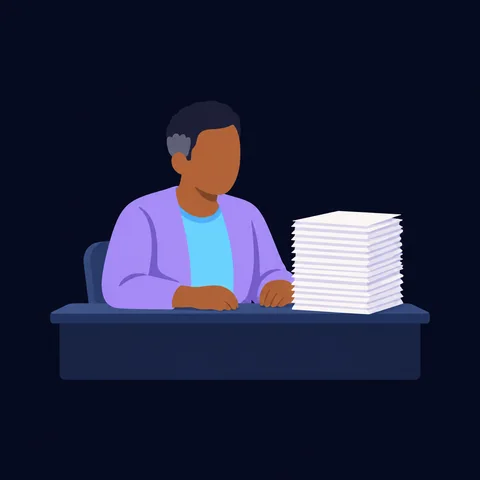 The whole class’s drafts
 Pasted into a free third-party detector
 Its retention policy: one sentence
 Some were reflections promised to stay private
Table 1 · POLICY MAKERDetectors are sold straight to instructors. Require what?
Table 2 · STUDENTYour reflection went in. What do you ask for?
Table 3 · TEACHERYou meant to protect honest students. What instead?
Table 4 · UNIVERSITYYour vendor process never reached her. Whose failure?
Ask the lived-reality question: What does a student experience when writing style becomes grounds for suspicion?
Where the four roles disagree. A fair goal, and a method that took thirty people’s data to investigate one. The university’s process never reached her.
What data, whose, into which tool, retained how long, authorized by whom? Authorization, not intention.
STUDENTMy private reflection was uploaded
TEACHERI uploaded thirty to catch one
UNIVERSITYOur vendor process never reached her
POLICY MAKERDetectors reach instructors directly
AUTHORIZATION, NOT INTENTION.
Twenty-nine of them are not suspected of anything.
Why this leads forwardPrivacy asked what may go in. Next: confident, wrong output.
9 MIN
Screen 10 of 130:47–0:49
Angle 5 of 5 · Safety · what it means
Safety / non-maleficence: AI output is checked before it can hurt someone.
Safety means preventing foreseeable harm from AI output: checking it before anyone acts on it, and letting a person stop its use.
Not safe
A campus health app gives confident advice that is wrong. Nobody tested it, and nobody can switch it off.
Safer
The advice is tested before launch, and a named person can pause the app while a risk is checked.
In course terms. It protects people, from false, unsupported or dangerous output. The question it asks: What failure modes must be tested, and who has authority to stop the use? What it asks of an institution: require checks, and let a person pause the use while risk is unresolved.
Why this leads forwardNext: an answer that is confident, fluent and wrong. First the situation, as a class; then your table plays its role.
2 MIN
Screen 11 of 130:49–0:58
Angle 5 of 5 · Safety · the case
The instructions were confident, fluent, and dangerous.
1 · What is happening? A student asks an AI tutor to explain a lab procedure. The answer is clear, well organised, and includes a step that would produce a harmful reaction. The student notices nothing wrong. A lab partner does, an hour before the session.
2 · Role play. Each table is one person in this story. Read your table’s question, then agree on one action your role takes now (two minutes). Hear another table: keep or change it.
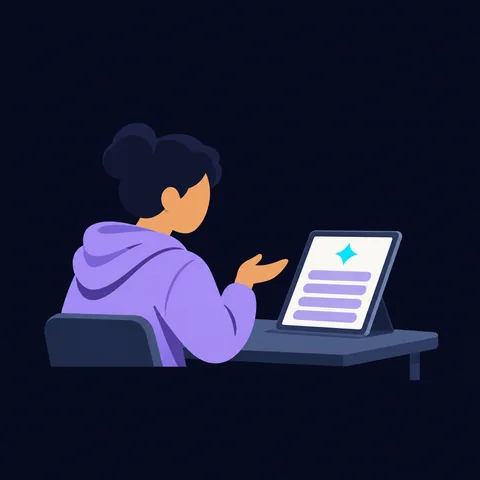 A student asks an AI tutor about a lab procedure
 A clear, well-organised answer
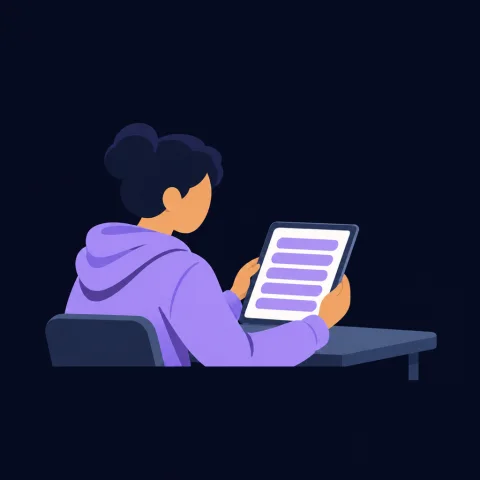 The student notices nothing wrong
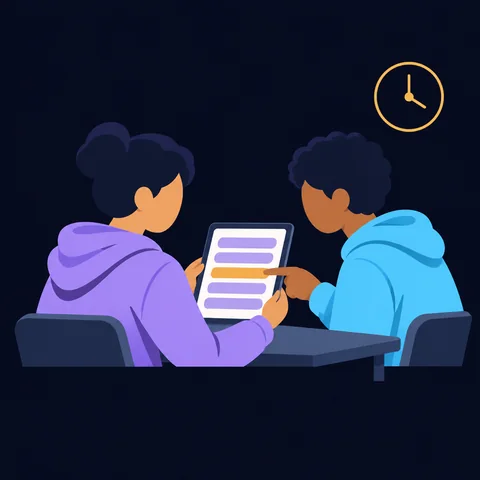 A lab partner spots it, an hour before the lab
Table 1 · STUDENTYou would have run that step. What do you change about how you use the tutor?
Table 2 · TEACHERYou recommended the tutor to the class. What do you do before the next lab?
Table 3 · UNIVERSITYThe tool is in your approved list. Who has authority to remove it, and how fast?
Table 4 · POLICY MAKERThe tutor is used across twelve campuses. What must be tested before approval?
Where the four roles disagree. The student did not see the problem. The teacher recommended it. The university approved it. Who can pull it, and how fast? The policy maker must test for failures nobody has seen.
The structural answer: a check somebody performs, and a named person who can stop the use. “Be careful” prevents none of this.
Fluent and correct are different properties.
STUDENTI did not see the problem
TEACHERI recommended the tutor
UNIVERSITYWe approved it. Who can pull it?
POLICY MAKERWho tests for failures nobody has seen?
FLUENT AND CORRECT ARE DIFFERENT PROPERTIES.
Nothing about the answer looked uncertain. That is the failure mode.
Why this leads forwardFive angles, five cases, four roles. Next: why the roles differed.
9 MIN
Screen 12 of 130:58–1:04
Same case, four roles: why did the answers differ?
Within one case, all facts were on one screen. If the roles answered differently, pick the explanation that fits best.
1 · Pick one explanation, as a table or by a show of hands.
Choose one first. Then compare another response and decide whether your thinking changes.
The finding: a duty belongs to whoever can actually carry it out.
AS THE STUDENTYou can disclose, verify, and ask
AS THE TEACHERYou decide what counts as evidence
AS THE UNIVERSITYYou supply the tools and a correction path
AS THE POLICY MAKERYou set the floor every campus must meet
SAME CASE. FOUR DIFFERENT DUTIES.
3 · Name one case where your role wanted something a different role could not give. That gap is what Meeting 2 turns into policy.
Two things are true at once: these angles do real work, and applying them to this university is our own reasoning rather than a tested finding. The four review papers on the Topic 3 page are the theoretical support and your assignment reading; they do not prescribe one university policy.
Why this leads forwardYou have the gaps between the roles. The last screen turns them into five decisions you are willing to defend.
6 MIN
Screen 13 of 131:04–1:09
Save five decisions for your Ethics Use Plan.
Use paper or private notes. This checkpoint is a scaffold for the written policy memo, not a separate submission. If a decision depends on a case your class did not reach, write a provisional decision or the question you would need answered.
MY ETHICS
USE PLAN
USE PLAN
1 · ALLOW
2 · DISCLOSE
3 · PROTECT
4 · VERIFY
5 · ESCALATE
1 · Allowed helpOne use that supports learning without replacing authorship.
2 · DisclosureTool, type of help, and affected stage.
3 · Protected inputWhat must not enter an unapproved tool.
4 · VerificationHow claims and citations will be checked.
5 · EscalationWhen to stop and ask a human.
Meeting 1 close: principles become useful only after they create a visible obligation, evidence check, or stop rule.
Why this leads forwardMeeting 2 will turn these personal decisions into an institutional policy and test it against fairness.
5 MIN
Screen 1 of 90:00–0:03
One rule. Six cases. Does it hold?
Four roles, one table, one path. Your choices change what the next role faces; round 4 writes the clause.
1STUDENT
2TEACHER
3UNIVERSITY
4POLICY MAKER
Relay order: STUDENT, then TEACHER, then UNIVERSITY, then POLICY MAKER.
“Students may use AI responsibly.”
It leaves six unanswered questions. Each case is one of them.
Open the simulation on one laptop per table, choose your table number, wait for Case 1.
Open the Topic 3 Policy Simulation
Course synthesis: these classroom consequences apply the four reviews; the reviews did not test this scenario.
Why this leads forwardCase 1 asks the first unanswered question: what does “disclose” have to contain?
3 MIN
Screen 2 of 90:03–0:13
CASE 1 · DISCLOSURE — one line on the last page.
“I used ChatGPT.” Is that a disclosure?
Ten minutes, four rounds, then your clause.
1STUDENT
2TEACHER
3UNIVERSITY
4POLICY MAKER
Relay order: STUDENT, then TEACHER, then UNIVERSITY, then POLICY MAKER.
The case. The syllabus permits AI “with disclosure.” A student uses a chatbot while writing a policy essay and writes one line on the last page: “I used ChatGPT.” The essay is clear, well organized, and better than the last one. Nobody yet knows what the tool did.
Model clause. A student may use permitted help, must disclose the tool if known, the type of help, the stage affected, the important changes the student made, and what was independently verified, and may never claim unverified output as checked work.
Where the roles disagreed. The student wanted five minutes. The teacher wanted something gradable. The university wanted one form. Only the five-element summary gave all three.
Disclosure runs on summaries: prompt summaries are the default; a complete private chat history is not routine evidence.
Why this leads forwardNext case: protected inputs.
10 MIN
Screen 3 of 90:13–0:23
CASE 2 · PROTECTED INPUTS — feedback pasted into a free tool.
Whose words went into the tool?
Ten minutes, four rounds, then your clause.
1STUDENT
2TEACHER
3UNIVERSITY
4POLICY MAKER
Relay order: STUDENT, then TEACHER, then UNIVERSITY, then POLICY MAKER.
The case. A student wants better feedback on a draft. Into a free AI tool they paste the assignment sheet, the professor’s written comments on their last paper, and two classmates’ peer reviews with names attached. The advice is excellent. The tool’s terms allow uploads to be reused.
Model clause. A student may upload their own draft and notes to an approved tool, must check the assignment’s upload rule before pasting anything they did not write, and may never upload instructor-owned, peer, private, unpublished, identifiable, confidential, or restricted material.
Where the roles disagreed. The student wanted feedback; the classmates wanted their names kept out; the university wanted one list. One clause serves all three.
Why this leads forwardNext case: what the grade measures.
10 MIN
Screen 4 of 90:23–0:33
CASE 3 · WHAT THE GRADE MEASURES — Student A and Student B.
AI made Student A’s essay better. Is the grade fair?
Ten minutes, four rounds, then your clause.
1STUDENT
2TEACHER
3UNIVERSITY
4POLICY MAKER
Relay order: STUDENT, then TEACHER, then UNIVERSITY, then POLICY MAKER.
The case. An assignment explicitly permits brainstorming, outlining, and rewriting with AI. Student A uses all three, discloses, and submits an essay far stronger than usual. Student B writes alone and earns a lower grade. The rubric grades the final essay.
Model clause. A student may use the AI help an assignment permits, must know before starting what the grade measures and have a no-cost route to any required tool, and may never be graded against a tool they could not reach.
Where the roles disagreed. Student A wanted credit for judgment; Student B wanted a grade that measured no tool; the university wanted an affordable floor.
Your own judgment on this case is the private baseline for memo section D. It is not submitted.
Why this leads forwardNext case: evidence and appeal.
10 MIN
Screen 5 of 90:33–0:43
BACK TO the invented-citations case (Meeting 1, Angle 3)CASE 4 · EVIDENCE AND APPEAL — a detector scores the lab report.
98% AI, says the detector. What is proved?
Ten minutes, four rounds, then your clause.
1STUDENT
2TEACHER
3UNIVERSITY
4POLICY MAKER
Relay order: STUDENT, then TEACHER, then UNIVERSITY, then POLICY MAKER.
The case. The lab report cited two studies that do not exist and was graded A−. The department now runs it through an AI detector: “98% AI-generated.” The student says a tool produced the citations; the tool kept no record.
Model clause. A student may explain their sources and show their drafts, must receive the evidence, a chance to respond, a review, and an appeal before any sanction, and may never be sanctioned on detector output or writing-style suspicion alone.
Where the roles disagreed. The student needed a way to show their work; the teacher needed something to act on; the university needed one standard.
“98% AI” is a claim needing separately appropriate evidence; the reviews do not establish detector accuracy.
Why this leads forwardNext case: process evidence.
10 MIN
Screen 6 of 90:43–0:53
CASE 5 · PROCESS EVIDENCE — an outline the student cannot explain.
The tool wrote the outline. Who did the learning?
Ten minutes, four rounds, then your clause.
1STUDENT
2TEACHER
3UNIVERSITY
4POLICY MAKER
Relay order: STUDENT, then TEACHER, then UNIVERSITY, then POLICY MAKER.
The case. For a policy analysis, a student asks a tool for an outline and a first version of the main argument, then revises the wording and submits. In office hours the professor asks what the second paragraph claims and why. The student cannot say. The prose is excellent.
Model clause. A student may use permitted help to support the learning labor an assignment targets, must be able to explain, verify, adapt, and defend the reasoning they submit, and may never submit reasoning they cannot account for as their own.
Where the roles disagreed. The boundary is whether AI supports or replaces learning labor: the student wanted polish to count; the teacher asked who reasoned.
Heuristic, not verdict. Evidence layers: FINAL PRODUCT, PROCESS EVIDENCE, VERIFICATION, DEFENSE / APPLICATION; no single bundle fits every assignment.
Why this leads forwardNext case: silent default.
10 MIN
Screen 7 of 90:53–1:03
CASE 6 · SILENT DEFAULT — the assignment never mentioned AI.
The assignment said nothing about AI. What is the rule?
Ten minutes, four rounds, then your clause.
1STUDENT
2TEACHER
3UNIVERSITY
4POLICY MAKER
Relay order: STUDENT, then TEACHER, then UNIVERSITY, then POLICY MAKER.
The case. A reflection paper is assigned with no mention of AI. The syllabus permits AI “with disclosure” in general. The night before it is due, a student has a tool rewrite the whole draft. It reads beautifully. The professor did not expect that.
Model clause. A student may use AI to support their own work when an assignment is silent, must ask before using it for anything more, and may never submit prose rewritten by a tool unless the assignment explicitly authorizes it.
Where the roles disagreed. The student wanted a rule at 9 p.m.; the teacher wanted their own voice back; the university wanted one default.
Why this leads forwardSix clauses on the table. Next, the memo builder.
10 MIN
Screen 8 of 91:03–1:09
Write the clause your memo turns on. One sentence.
Section C is what a reader can check. Tighten your strongest clause.
ADiagnose the case150–175
BChallenge ban + detectors200–225
CWrite operational policy175–200
DJudge fairness both ways275–300
Your transparency-case sentences from Meeting 1 stay private; they are not submitted.
A · DiagnoseCase facts, sourced claims, inferences, unknowns.
B · ChallengeBest defense and criticism of ban plus detectors (Case 4).
C · PolicyAllowed, disclose, prohibited, privacy, assessment, due process, default.
D · FairnessBoth sides, what the grade measures, one condition that could change your answer (Case 3).
Tighten your strongest clause into one sentence: “A student may ______, must disclose ______, and may never ______.”
One that works: “A student may use AI to brainstorm and check clarity, must disclose the tool and the stage it affected, and may never upload another person’s work or submit an unverified claim.” A permission, a duty, a prohibition; a reader can tell whether it was followed.
Why this leads forwardNext: the submission and AI-use boundaries.
6 MIN
Screen 9 of 91:09–1:13
Submit your judgment, not AI-written prose.
Due before Topic 4. Cite at least two reviews; do one deeper reading via an accessible route.
Open the complete Responsible AI Policy Memo assignment
Submission: one PDF via the course LMS before Topic 4, named Lastname-Topic03-PolicyMemo.pdf, in this order: reading matrix → memo A–D → references → ~50-word AI-use disclosure. Due date and late rules: LMS calendar.
Why this leads forwardTopic 4 applies this policy to a reviewable writing workflow.
4 MIN